Beyond the Console: When Video Game Music Takes Centre Stage in Liverpool
BBC
For decades, video game music has existed in a strange cultural in-between. Universally recognisable yet rarely afforded the same reverence as film scores or classical compositions, its emotional power has often been felt privately, through headphones, late-night play sessions and pixelated worlds. On January 24, that changes in Liverpool by going beyond the console.
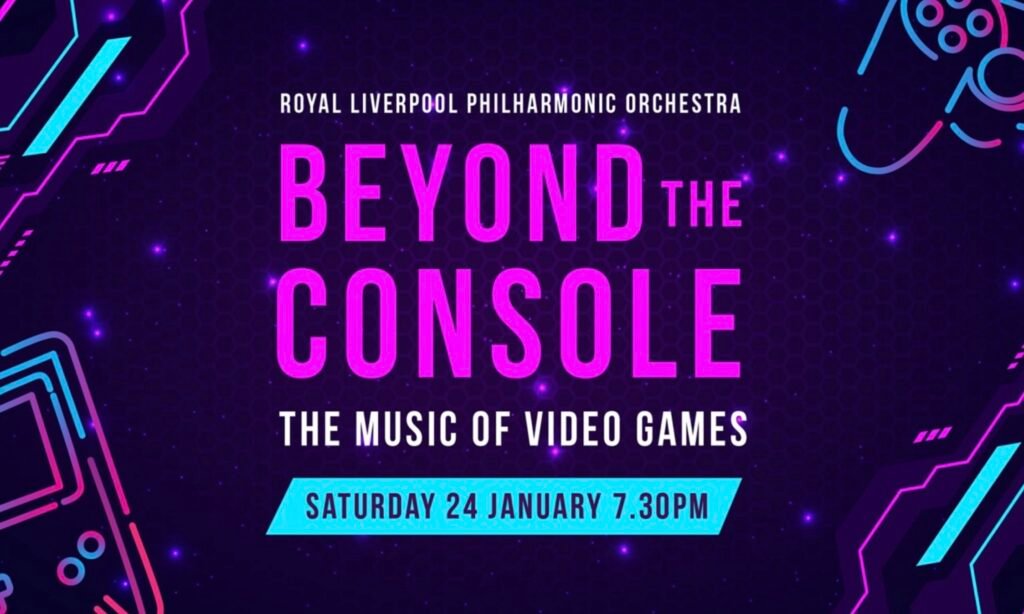
The Royal Liverpool Philharmonic Orchestra will present Beyond the Console: The Music of Video Games, a concert dedicated to some of the most iconic scores in gaming history. Far from novelty nostalgia, the event positions game music exactly where it belongs: on a concert hall stage, performed by one of the UK’s most respected orchestras.
From Hyrule to the Wasteland
Conducted by Robert Ames and presented by the fantastic Elle Osili Wood — BAFTA Games Awards host and voice of BBC Radio 3’s Sound of Gaming — Beyond the Console brings together a programme that spans genres, generations, and emotional registers.
Audiences can expect music from The Legend of Zelda, Final Fantasy, Baldur’s Gate 3, Skyrim, The Last of Us, Fallout 4, and Uncharted, showcasing how video game scores have evolved from catchy motifs into fully realised orchestral storytelling.
The composers represented read like a canon in their own right. Nobuo Uematsu’s melodic mastery helped define role-playing games for millions, while Jessica Curry’s intimate, atmospheric compositions proved that restraint can be just as powerful as bombast. Jeremy Soule’s sweeping fantasy themes continue to echo far beyond the worlds they were written for. Together, these works underline a simple truth: game music is no longer borrowing legitimacy from classical traditions it has earned it more than any other medium.
Liverpool, Games, and Creative Legacy
Hosting Beyond the Console in Liverpool feels particularly fitting. The city has quietly become a significant UK hub for video games and creative innovation, supported by a strong independent development scene, active game-dev networks and a growing talent pipeline through its universities.
Liverpool also occupies a notable place in the history of game music. In the 1990s, the city-based studio Psygnosis, later acquired by Sony, played a key role in shaping the early identity of the PlayStation era. The studio’s influence extended beyond gameplay, helping to establish a more ambitious, stylised, and musically driven approach to console games at a formative moment in the medium’s history.
Beyond the Console doesn’t just celebrate game music, it acknowledges Liverpool’s ongoing relationship with the industry and its cultural impact.
More Than a Concert
Ahead of the performance, the Royal Liverpool Philharmonic Orchestra will also host a pre-concert networking event, bringing together professionals from the gaming and music sectors. The aim is to encourage conversation, collaboration, and cross-pollination between two creative industries that increasingly overlap but rarely share physical space.
It’s a reminder that video game music doesn’t exist in isolation. It’s composed, recorded, performed and lived — shaped by real people working across disciplines, technologies, and traditions.
A Cultural Shift, Played Live
Beyond the Console: The Music of Video Games isn’t about proving that game music is “serious” or “valid.” That argument has already been won by the composers, players, and performances that continue to move audiences worldwide. Instead, this concert feels like a celebration of arrival, a moment where an art form steps confidently into the spotlight, unapologetic and fully formed.
On January 24, in Liverpool, the controller is put down, the orchestra tunes up and the worlds we’ve explored digitally are finally allowed to resonate in the open air.
Click here for my thoughts on the previous years show.
About The Author